blast beat brutalizer

Impassioned music reviews for metal fans

Tag: review

  • I Feel The Everblack Festering Within Me

    lorna shore

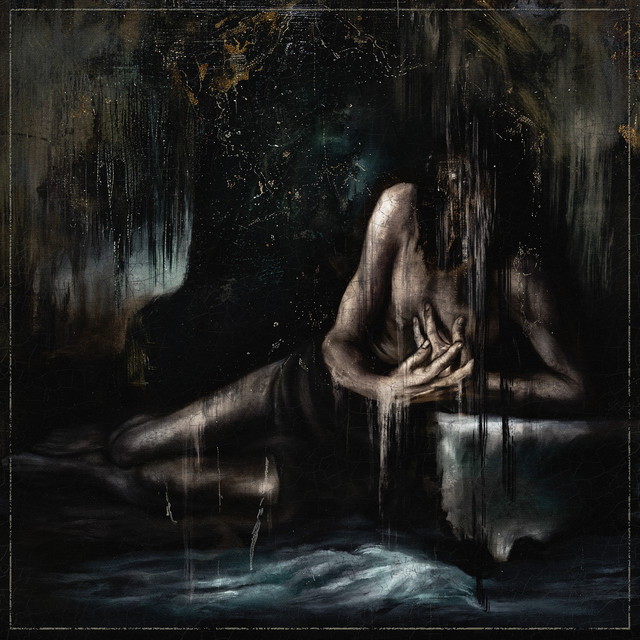
    i feel the everblack festering within me

    5.9/10

    published on 2025/09/12

    Fine. I’ll say it.

    This is bad. Because it’s the same.

    Which means: this is actually a pretty good album. But it is truly as close to Pain Remains Again as it could be.

    I came across Lorna Shore with the release of 2020’s Immortal. Immortal represents a new era for Lorna, because of an evolution of instrumentation as well as the addition of a new vocalist.

    I was re-entering the deathcore scene when Immortal came out and was extremely unfamiliar with the symphonic additions to deathcore at that time. I found Immortal to be a doorway into a new sound; a style that I was immediately enamored with.

    Then comes …And I Return to Nothingness: a perfect EP. It introduces us to Will Ramos in the context of Lorna Shore and showcases the evolution of Lorna’s symphonic and choral additions to the blown-out, hyperproduced deathcore sound. I thought, and still think, this EP is a 10/10.

    Then comes Pain Remains, which is functionally perfect except for the length of the record. I found lyricism to be compelling and emotional at times throughout the record. I found the concept of the entire record to be extremely interesting.

    I enjoyed what guitarist Adam De Micco brought to the table and the way that the band layered in orchestral elements to a punishing arrangement. I did not enjoy the 61 minute runtime that it demands, but at the same time, I felt the record deserved that space to explore.

    So I hesitantly say that I love Lorna Shore’s most recent releases. And I Feel The Everblack Festering Within Me is not a departure from their established sound. In fact, it’s not even a step down in any way. But, here’s the problem.

    It’s not a step up either. It’s not a lateral move. It’s the same.

    There are brief bright spots on the album, like “Glenwood”. I like the clean, finger-plucked guitar chords in the introduction and I like the melody that slides over the chords. Of course, the rest of the song sounds like any other song off of Pain Remains (complete with the key change chorus at the close), with occasional callbacks to that introduction progression.

    I also like the tension-building provided by the backing quartet strings on “A Nameless Hymn”, which brandishes some uniquely freakish and shrill howls from Ramos to cut through the mix. Similar anxiety-inducing soundscapes appear on the single and lead-off track “Prison of Flesh”, but that’s all that differentiates it from many of the tracks that follow it on this LP.

    That being said, as the album plods along through the mud, “War Machine” can’t help but perk your ears up. With a chunky bass riff leading into some gunfire, the intro diverges from the formula.

    For Lorna, what follows is a bit of an experiment, a slight step away from the monotony. This song sounds pissed and driven. It has chugs-on-the-prowl-for-prey, a unique solo, and an obnoxious (read: a hell yea) breakdown. If I had to pick one song to say “I wish the rest of the record sounded like this”, it would be “War Machine”.

    The closer “Forevermore” also dances into slightly differentiated sonic territory, with a wavering and foreboding vocal melody and triumphant orchestral sounds in the introduction. It’s a great closer for any album, but I wouldn’t say that it necessarily would feel out of place on their previous LP.

    In contrast, tracks like “In Darkness” and “Unbreakable” follow the template that was hammered out in 2021 and 2022. “In Darkness” mimics the aforementioned multi-key change chorus made famous on “Pain Remains II”. A multi-key change outro feels emotional and cinematic when Pain Remains as a whole is coming to a close and the lyrical finality is setting in.

    When it’s placed in track 3, it feels hollow. I wonder “What are we rising up from? What is the lyrical or emotional climax that we are witnessing here?” and left wondering.

    The hypnagogic-jerk-inducing 1-2 combo of “Lionheart” and “Death Can Take Me” truly represent Pain Remains B-Sides. There’s no there there with these tracks, save slight choral additions to break up the break-neck pace of De Micco and company’s recycled “verse riffs”.

    There are also a ton of reused musical motifs or themes throughout this record. Guitar riffs and chugs could be blindly swapped between the two records and none would be the wiser to that slight of hand.

    It’s to the point that I’m thinking about articulations of riffs and thinking “pretty sure this same pattern was used on Pain Remains“, and I’m not smart enough to be thinking about that kind of thing.

    Related to things I shouldn’t have an opinion about, I’m usually not one to comment assertively on the mix or production of a record because I don’t feel like I’m qualified. However, it is impossible to talk about this record without pointing out the blasts and bass drops and the perception of the song “clipping”.

    It’s unavoidable when every song has multiple instances of these psuedo-deafening blasts. This also creates a false sense of dynamic range to me; the loudest parts are not actually the loudest parts because the bass drops tower over them.

    With these criticisms that I’m levying against a band whose work I truly enjoy, from Psalms to Flesh Coffin to Immortal to Pain Remains, it is with a heavy heart that I say that this record is letdown.

    Lorna toured on Pain Remains for roughly 3 years. In my own mind, the hype has continued to mount exponentially since Pain Remains. Maybe it would have been impossible to satisfy the hype that I built up for I Feel The Everblack Festering Within Me.

    Anything that I get from this album going forward could be chalked up to psychological familiarity. That which is familiar is predictable, safe, and comforting. I Feel The Everblack… might grow on me because of that.

    Perhaps I will recognize that it is a more refined version of Pain Remains, and that fact would earn some credit. Maybe there will be lyrics that truly capture me along the way.

    What time and familiarity won’t change is that I Feel The Everblack Festering Within Me could have been so much more.

    I’m not mad, I’m just disappointed.

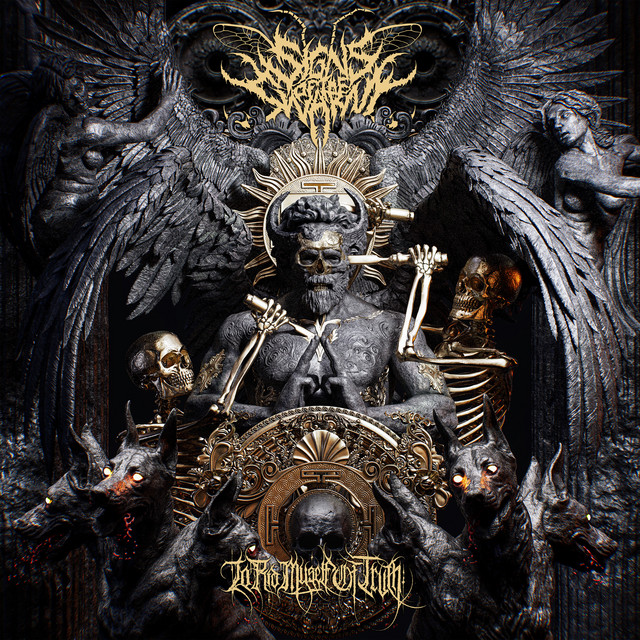
  • To Rid Myself of Truth

    signs of the swarm

    to rid myself of truth

    8/10

    published on 2025/09/05

    If you cast your judgment of To Rid Myself of Truth based on the first three singles released ahead of the record, just as I did, then you would not be remiss to believe that …Truth was business as usual for Signs. Tracks like “HELLMUSTFEARME” and “Scars Upon Scars”, in isolation, pale in comparison to standalone singles “IWONTLETYOUDIE” or “Pernicious”. There appears to be no articulation of their sonic development.

    When there is, as presented on “Clouded Retinas”, it sounds like the featured artist wrote the back half of the track. Or, at best, Signs catered to the guest vocalist’s main project.

    With that being said, I was underwhelmed and fairly dismissive when the LP dropped in its entirety. I was prepared to bear witness to a band with a promising and interesting sound wither away and cave to creating Pt. II of the works that made them earworthy.

    If I had maintained faith in one of my favorite bands in the early 2020s deathcore scene, I would have recognized the direction of this project from the fourth and final single before release – the self-titled and opening track on the record. As To Rid Myself of Truth begins, I hear the grooves that enthralled me initially with Signs on Absolvere.

    This opening track and “Natural Selection” bring menacing nu-metal inspired riffs which add an accent to the established elements that are welcomed back into the sonic fold. To Rid Myself of Truth is the perfect combination of the pounding but fun rhythm of Amongst the Low and Empty and the atmospheric and oppressive tone of Absolvere.

    To Rid Myself of Truth is a notable example of “songs-in-context-of-the-album” being better than in isolation. “HELL…” and “Scars…” represent the giddy pummeling of Amongst The Low and Empty, or the ominous, cavernous pleading of Absolvere, respectively.

    In that sense, in a vacuum, these songs seem uninspired. In the context of …Truth, “Chariot”, “Sarkazein”, and those aforementioned tracks skew towards “business-as-usual” as opposed to “highly experimental” or “boundary-pushing”; but these tracks also skew towards “fun”, “bouncy”, and “groovy” rather than “tedious” or “taxing”.

    There are noticeable inspirations, some new and some old, in the instrumentation on …Truth. The guitars are searing, full-bodied, and provide ample head-nod-inducing riffs over Bobby Crow’s exceptional drumming performance. There are elements of nu-metal, black metal, death metal, and slam across this record, including prominent occurrences of the vocal tape rewind effects that will sound familiar to longtime listeners.

    David Simonich continues to make very noticeable incremental improvements on To Rid Myself of Truth. “Forcing to Forget” demands your attention with an exceptionally emotive vocal performance from Simonich.

    With a dynamic sonic texture and introspective lyrics alluding to a tortuous prison of an existence to boot, this is the most experimental attempt on the record and really shows Signs wading into untested waters, with highly positive results.

    In contrast, “Fear & Judgment”, …is hard to describe, as it is experimental in the other direction. Is it a posse track? Is it a critique of the underpinnings of societal in/out group thinking and the rejection thereof (“Keep your seal of approval / keep your Judas kiss”)?

    Is it the most nu-metal groove inspired assbeater on the album? It’s all of these things, but in a Gestalt way, insofar as its value when the elements are combined.

    Signs of the Swarm capitalized again on an energetic release just as summer comes to a close. This is to say nothing of the lyrical content (mostly dealing with the hellscape that is damnation or just average human life on Earth).

    Pointing out the energetic summer release, however, is to say something of the energy and passion that this record exudes. It is to say something about the lack of pretense and the abundance of focus that Signs of the Swarm put into making fun, catchy songs.

    In my review for Amongst the Low and Empty, I made a passing criticism that Signs did just enough to capture and maintain my attention. They very nearly lost it based on the singles leading up to the release, but after several listens of the whole LP, To Rid Myself of Truth improves upon the previous output and proves itself to be a cohesive, engaging, and praiseworthy piece of art.

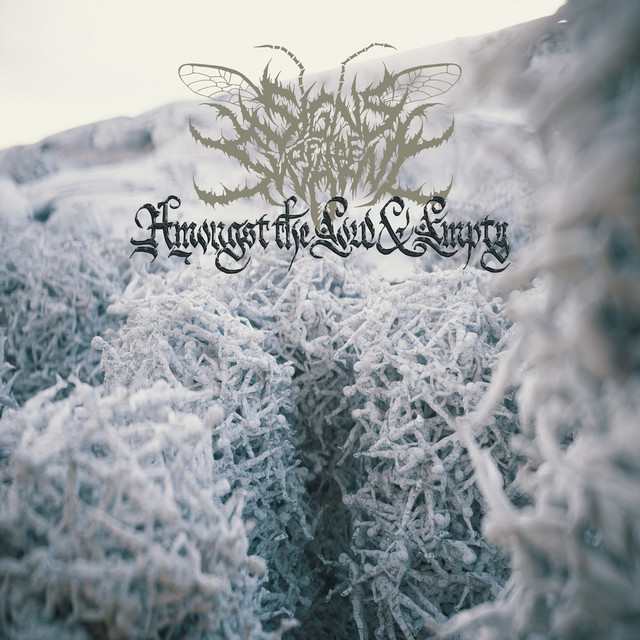
  • Amongst the Low and Empty

    signs of the swarm

    amongst the low and empty

    7.8/10

    This review was originally written on 2023/07/28

    Signs of the Swarm have continuously pushed their signature style of deathcore without falling victim to the common modern tropes of the genre. You will not find melodic orchestral string arrangements here, nor will you find slow, nu-metal-influenced chugging. No clean vocals, no dance music-esque interludes – this is about as straightforward a deathcore offering as you’ll hear in 2023.

    The atmosphere and use of the aforementioned interludes is more akin to their 2019 release, Vital Deprivation. Gone is the massive, ambient foreplay before each track – replacing them are creepy, almost unsettling passages which span much smaller portions of tracklist.

    What I call “the atmospheric elements” (the arpeggiated synths, the ethereal pads, the scratchy siren-like risers, etc.) of this record are much more subtle, and act much more as an adhesive for other elements of the track, rather than standing out as their own distinct element. This may be one component of Amongst… feeling like the tightest and most focused release from the Signs’ catalog.

    Amongst… seems segmented between the “heavier, brutal-er, bouncier” first portion of the record, while the second half feels “progressive, thoughtful, experimental” (relative to their previous output). In the first half, exceptional riff writing is displayed on tracks like “Pray for Death”, which harkens back to “Totem” – a bouncy, head-nod-inducing riff that really catches your ear, even on a passive listen.

    In contrast, songs in the second half, including “Shackles Like Talons”, “DREAMKILLER”, and “Faces Without Names”, showcase some of the most diverse, dynamic, and complete songwriting that we’ve seen from Signs. “Shackles…” features an intro that is slightly reminiscent of The Acacia Strain, “DREAMKILLER” is the most melodic and emotive track on this release (should have been the closer instead of “Malady”), and “Faces…” is the most complete ‘song’ on the record – with diverse vocal sounds and interesting musically arrangements, all while providing an exemplar of Signs’ signature sound.

    On the note of Signs’ signature sound, David Simonich’s vocal performance is as stellar as ever. While I mentioned that Signs is not buying into the common themes of the modern-day deathcore landscape, there is a little bit of the “vocal gymnastics” going on, especially on the title track “Amongst the Low and Empty”.

    However, Simonich manages to avoid coming off as obnoxious in his display of vocal prowess. If anything, it’s just massively impressive, mainly because it doesn’t sound like anything new is happening – it’s just improving on an established vocal tone in a terrifying way.

    See the end of “The Witch Bekons”, which has one of the most unique and ear grabbing vocal sounds on the record (followed by what I perceive to be off-mic coughing). “Echelon” is another prime example of Simonich flexing his vocal range, with some goblin-like screams to open the track.

    While I think that ultimately, I like Absolvere better at this point, I don’t think that I have any truly negative comments about Amongst the Low and Empty. Like I said, I think that listening to the album as a whole would be much improved by rearranging the track order (make “DREAMKILLER” the “Death Whistle” of this release by simply making it the closer), and I would like to see them expand their sound even further in future releases.

    I feel like they grew “just enough” on this record to hold my attention, but not enough to blow me out of the water. Nonetheless, I think that “Amongst the Low and Empty” will stay on rotation for a good long while – because it’s a good damn record.

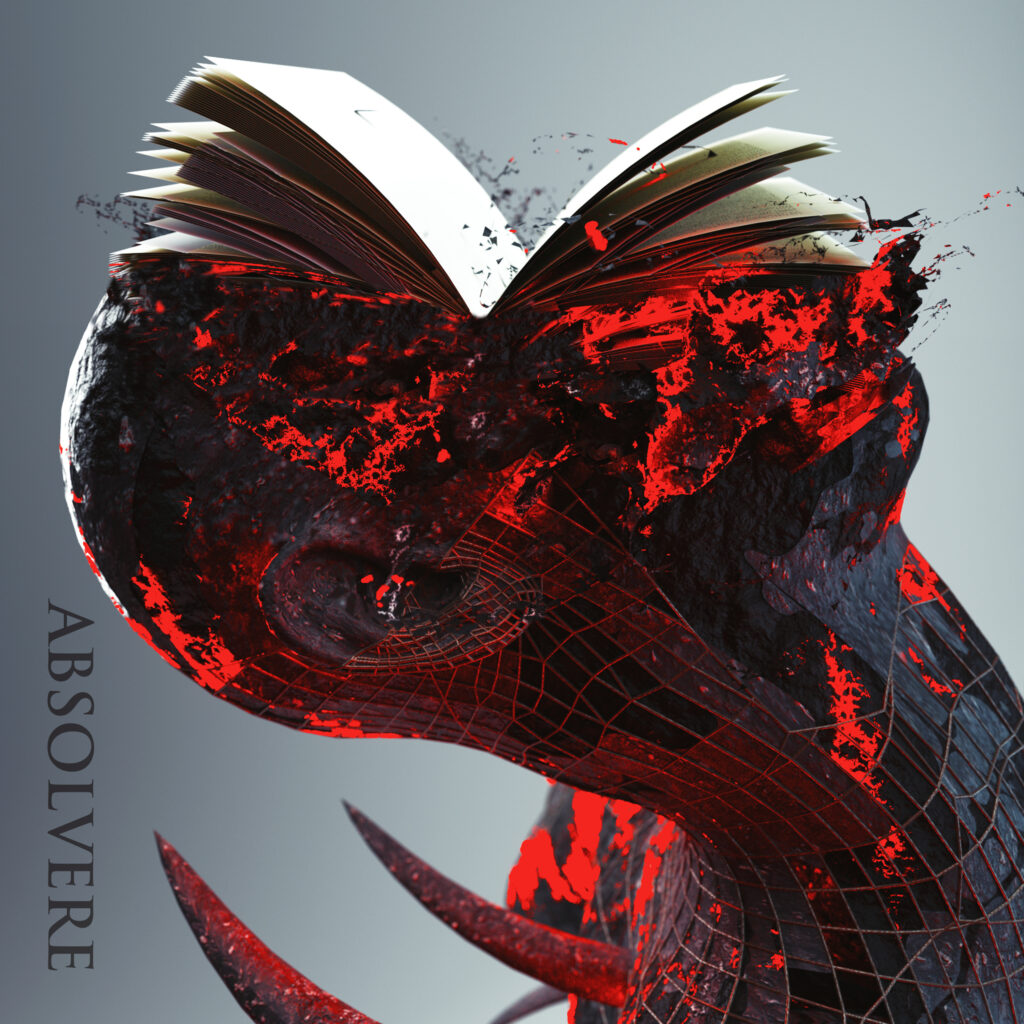
  • Absolvere

    signs of the swarm

    absolvere

    8.2/10

    This review was originally written on 2023/04/13

    Absolvere finds Signs of the Swarm at their peak performance. The name of the game with this album is groove and mood, a phrase I will repeat throughout. Absolvere is not a masterclass in technical musicianship (i.e. shredding), but it is an exceptional showcase of deathcore songwriting ability and musicality.

    Absolvere presents a dark, slightly unsettling, and brooding atmosphere – with crushing, sludgy riffs and excruciatingly low gutturals. The groove and mood of Absolvere is best exemplified on the single “Totem” – with a bouncy guitar line and a nod-inducing chorus (see also “Hollow Prison”) featuring David Simonich’s deep but controlled gutturals. “Revelations Ov a Silent King” provides further testament to Simonich’s vocal ability, displaying his full range in a brutal chug-a-thon of a song.

    The record does provide tympanic relief in the form of long, drawn-out ambient sections in between some tracks. These instrumental buffers build anticipation, especially as “Blood Seal” (with Ben Duerr of Shadow of Intent) comes to a close and leads into the stellar closer “Death Whistle”. “Death Whistle” is Signs’ at its absolute best – intense, heavy, but also providing one of the two choruses on the record with singing – a feature that I wish I heard more of throughout Absolvere.

    As far as the songwriting and musicality is concerned, Absolvere demonstrates Signs’ ability to harness a dynamic range of tempo within each song to demand engagement and intrigue. Look no further than the opening track “Hymns Ov Invocation” to hear a groovy chorus, a trudging breakdown, as well as some speedy blast beats. The ability to create varied song structures and rhythms without coming off as intentional chaotic is displayed throughout the album – making the record feel like less of a chore to listen to in its entirety.

    A low point for the album comes in the form of the vocals. The performance is excellent – it’s almost like highs became the mids and the lows just got as low as possible. The issue with this is the legibility. Frankly, I can easily understand about 5 lines in this whole album – the rest is just impressive screaming sounds to my ears. Without looking at the lyrics and listening along, I don’t think that many can make out the musings Simonich attempts to present. I’m not savvy enough to say whether it’s something with the mix, like compression or distortion, or if it lies in the performance itself – though the same issue can be heard on Vital Deprivations. While I very much appreciate the musicality of the vocal performance, I wish lyrics were better enunciated – especially considering how much I enjoyed the lyrical content on this one.

    All told, Absolvere is not a masterclass in technical guitar work or exceptionally experimental drumming – but that’s not what Signs of the Swarm is aiming for. Absolvere is a groove and a mood – a foreboding mood, but also an interesting harbinger of what the band will produce in the future.

  • Attack of the Wolf King

    haste the day

    Attack of the Wolf King:

    9.5/10

    This review was originally written on 2010/12/09 and received revisions in March 2023

    Haste The Day approaches the release of their fifth record, Attack of the Wolf King, with only one of the remaining members (Michael Murphy), but with the same rigor of the kids that formed the band in 2001.

    Attack is vivacious, aggressive, heartfelt, and perhaps HTD’s best effort in their career. With an evolution of the sound from darker tones of Dreamer and the atmospheric Pressure the Hinges, Haste The Day shows greater technicality and emotional vulnerability.

    Following the departure of the Chaulk brothers from Haste The Day, the area of singing (read “clean vocals”) was left vacant. Stephen Keech, the lead vocalist (screams) since the 2007’s Pressure the Hinges, rarely sang, instead opting to take a backseat to Brennan and Devin Chaulk when a chorus came around. This all changes on Attack of the Wolf King.

    Keech steps up and showcases his singing chops on most songs on Attack, most notably on “Wake Up the Sun”, “Travesty”, and “The Place That Most Deny”. Keech, however, does show that his singing is still in the development stages on tracks such as “Merit for Sadness”, where the backing vocals and production try to mask his lack of control.

    But, for what Keech lacks in vocal ability, he makes up for in the raw emotion the listener feels in his delivery. While Keech carries 90 percent of the vocal workload on Attack, he receives support from Murphy on “White as Snow”, which showcases the strongest singing performance (from both Keech and Murphy) on the whole record.

    The screaming performance on Attack is passionate and rarely departs from Keech’s established register. The listener will not find any monstrous growls or any devilish highs (a la Jimmy Ryan, former HTD vocalist). Instead, Attack presents an emotional performance and terrific example of Keech’s consistency in his screaming range.

    Throughout Attack, the lyrics are heartfelt and well-executed, though at times cryptic and epic in tone. While bands that share the genre with HTD tend towards the corny, sappy, or outright ludicrous, Attack shows a mature group of songwriters that are careful in their word choice, and thoughtful in their metaphors and imagery.

    Keech’s desperate delivery of “No, don’t let him in! Though he is dressed like the rest of us / He has the jackal’s eyes!” is a prime example of the hauntingly dark imagery, as well as the metaphorical focus on animals (mostly of the canine variety) employed throughout the album.

    “Travesty” is the most sincere and touching lyrical output on the record (“You cover the darkest part of me… With love that the blindest eyes will see”) while maintaining the dark imagery (“The eyes of death are upon me… With idle minds we grew unconscious as the hunter stalks his prey”).

    Sonically, Haste The Day straddles the line of melody and aggressiveness well, presenting the listener with both heavy-hitting breakdowns as well as catchy, melodic choruses. “Walk With a Crooked Spine” displays a longer performance of Keech’s singing that would seem docile when put against the rest of the record, but is followed by a crushing breakdown. HTD handles the juxtaposition of light against dark/ soft versus heavy expertly throughout the record, but is best exemplified in the closing track.

    The short closer is split between an ambient introduction and a driving close to the record, with the lyrics declaring “My name is darkness / and I have uncloaked my face to the light”. Guitarists Scotty Whelan and Dave Krysl offer what is, without a doubt, the most technically proficient and intricate guitar work ever displayed on a HTD record.

    While there is plenty chugging and riffing on Attack, the record is packed with blistering leads and well-placed fills that round out the sound of each track. Overall, the record is produced incredibly well, with pounding bass and snappy drums that don’t overtake any other aspect of the music.

    Attack of the Wolf King is to date the best record put forth by Haste The Day, and, despite its few shortcomings, will be a benchmark for the genre for a good long while.

    Of course, there are those of us in the HTD fan base that will pine for the days of “American Love” and “When Everything Falls”, but this record shows the band at its most skilled and focused. And at its best.